 chuck
Evidence: research-based explainer. No hands-on testing or live price verification.
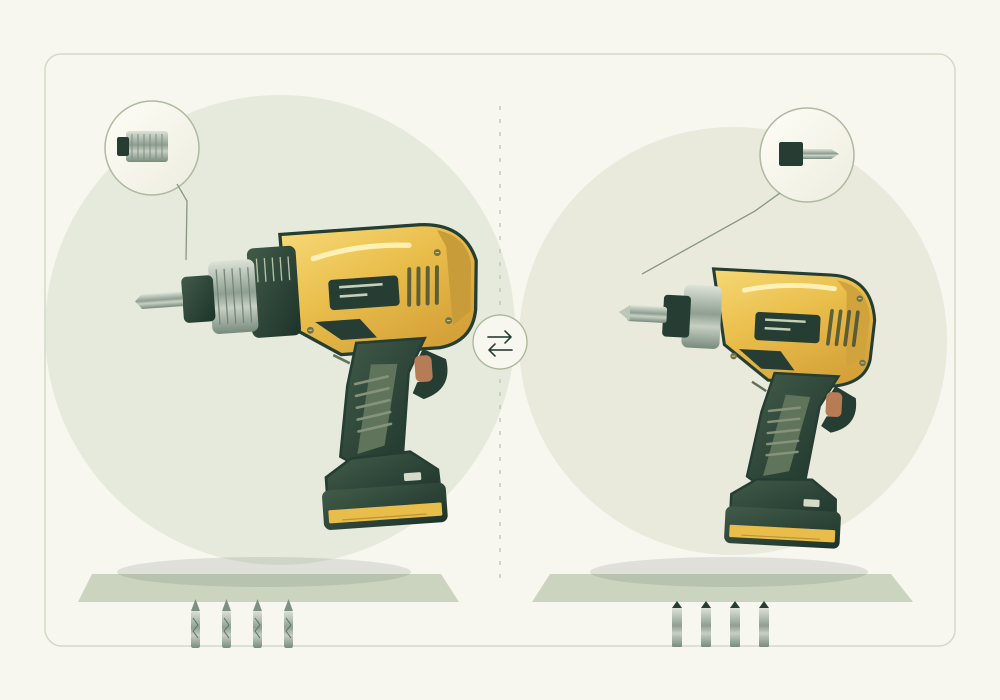
A drill driver is a useful first tool for everyday DIY. It makes holes and drives screws, and its adjustable chuck holds a range of bits. The clutch lets you limit how hard it drives a screw, which helps when you’re working with soft timber or assembling furniture.
An impact driver is built for driving fixings. When resistance rises, it adds rotational impacts to help turn the screw. Most have a quick-release hex bit holder rather than an adjustable chuck. Use bits and accessories rated for impact use.
If your jobs are mostly pilot holes, furniture assembly and the occasional repair, start by looking at a drill driver. For decking or other work with lots of long screws, an impact driver may be a useful second tool. Having both also saves you swapping between a drill bit and a screwdriver bit all afternoon.
An impact driver isn’t the same as an impact wrench, and its impacts aren’t a substitute for a hammer drill’s masonry action. Check what the job calls for, choose suitable bits and follow the tool’s instructions. Wear appropriate eye and hearing protection.
Different jobs, different strengths.
These are common tool-type differences. Check the exact model before choosing accessories or assuming a feature is included.
| What matters | Drill driver | Impact driver |
|---|---|---|
| Main purpose | Drilling holes and controlled screw driving | Repeated or demanding fastening |
| Common bit holder | Adjustable chuck | Quick-release hex holder |
| Driving control | Usually an adjustable clutch and trigger | Trigger control; available modes vary by model |
| A useful first purchase | Broad everyday DIY needs | A fastening-focused addition to a drill |
Build your buying brief.
- Do you need to make holes as well as drive screws?
- Will the job involve lots of demanding fixings?
- Are the accessories rated for the tool you choose?
Before you buy
Check the exact model, supplied kit and current manufacturer documentation. Our guides explain buying decisions; they do not replace the product manual.
Read our editorial methodology →